When I was 10 I featured in a nativity play put on by the local Lutheran church at the top of my street. I so wanted a key role – like Joseph or the shepherds. Rather I was cast as a tree. Yes a tree! I had leaves taped all over me and whenever the narrator said “the wind blew” I had to madly shake my arms. I look back now and see the local pastor did his best to create as many “extras” roles as possible, so all the local kids could engage with the Christmas story.
My mum loved to collect nativity scenes. When she passed away we had more than 20 to share among family and other collectors. She had all types – timber, clay, hessian, glass. My daughter Imogen likes to set one of these wooden nativities up each Christmas season in our home.
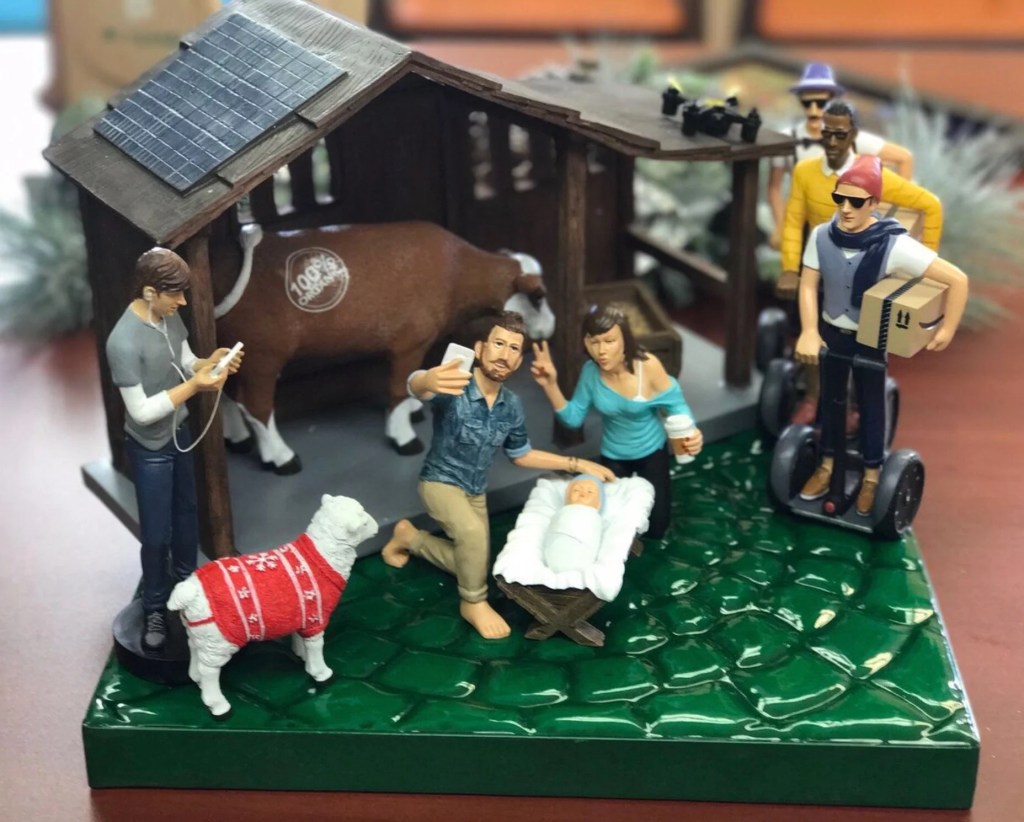
One nativity scene that wasn’t in my mum’s glass cabinet was the “hipster nativity”, complete with proud new parents taking selfies, gifts being distributed by Amazon workers and a solar-powered stable. Commenting on this contemporary nativity scene, Pastor Rod, at the church our family attended on Christmas Day highlighted, that while some may find it distasteful, particularly with its commercialised focus, does remind us that we’re all invited to be nativity participants. “We’re all invited – whoever we are, wherever we are, to see that the Christmas story is for all of us. We’re all invited to courageously contemplate what participating in this story means for us in 2025,” Rod commented.
St Francis of Assisi is believed to have been the first person to create a live nativity scene in Italy in 1233. He wanted the local community to fully enter into the wonder and mystery of the Incarnation story. To see the Christ child and ponder the significance of God becoming human in their lives.
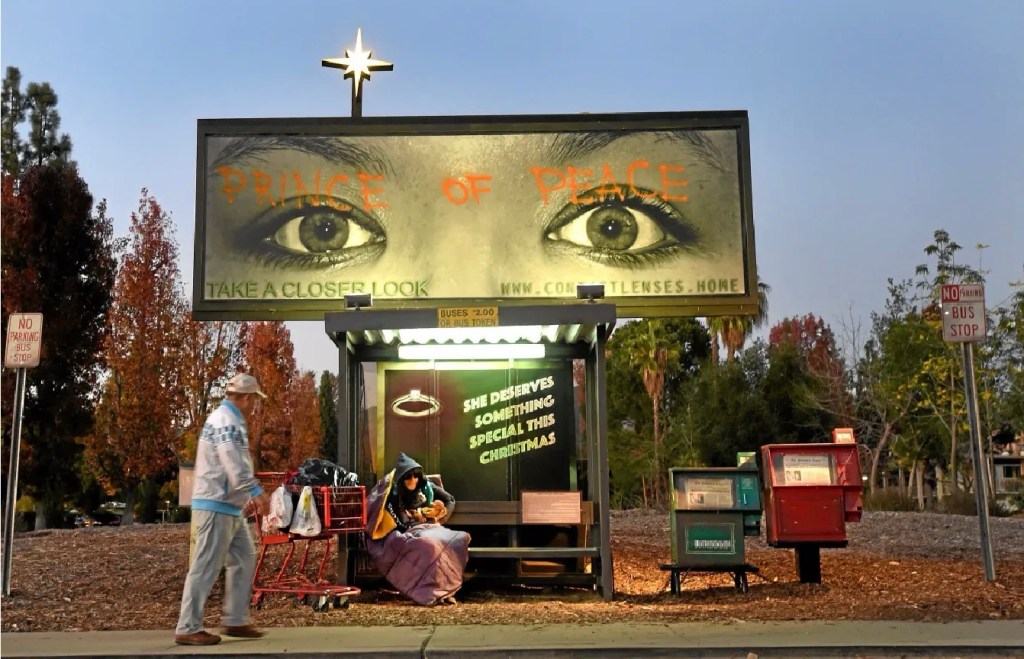
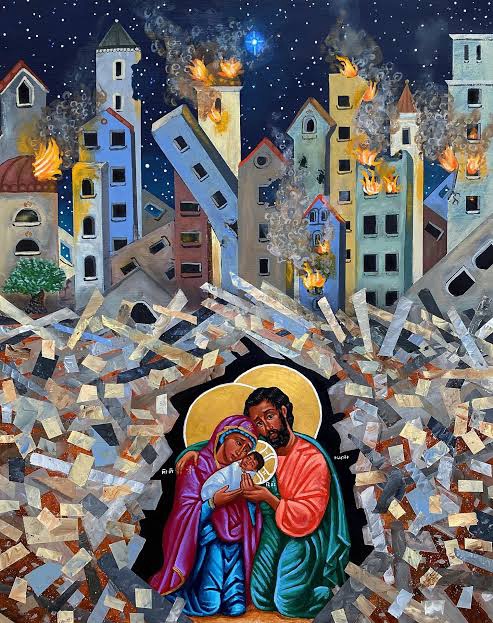
This Christmas some churches in the US have set up nativity scenes that powerfully highlight their opposition to ICE arrests and their standing with immigrant communities. In Gaza and Ukraine there are nativities that reflect ongoing conflict and loss – Jesus in the rubble. And in other scenes; Jesus is on the run with his parents, living like too many do today across the globe as displaced people. Another powerful scene captures the reality of rising homelessness.
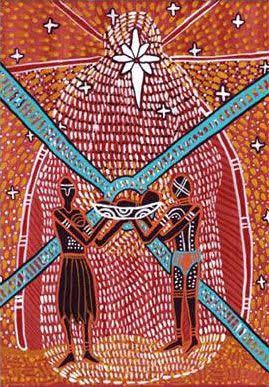
A few years back I attended a Christmas service that focused on the beautiful work of First Nations artists and their contextual nativity scenes. These indigenous renderings of Christ’s coming [like the one from Duwan Lee in this post] capture new things from the Bethlehem story for me to see and ponder.
I’m sure St Francis never imagined how his simple, powerful idea of bringing the Christmas story to life would play out over the centuries, including the highs, lows, laughter and tears that come with sitting through pre-school, primary school and Sunday school re-enactments of the Bethlehem event.
In the coming days as we pack up the decorations and put away the tree and our nativity scenes for another year, can I encourage you to pause and join St Francis in remembering that we are all part of Christmas story. The Emmanuel God – God with us now – beckons us to consider anew the implications and invitation of the Christmas story. We’re invited to slow and like the shepherds and the Magi gaze anew on the Christ child.
As the new year fast approaches we are beckoned to embrace the love, hope, humility, peace, justice and beauty of the Bethlehem story and bring these things to life each day in a broken, hurting and unjust world.
When the Magi encounter the newborn King in the stable, they resolve to not co-operate with the self-centred, violent and unjust ways of Herod. They choose to head home “a different way”.
Maybe that’s our need as the new year approaches – to humbly embrace personal change – that allows us to better reflect the love, hope, peace and justice of Jesus to others around us.
 apilgrimpens